What Size Inverter Do I Need? A Simple Load Calculation for Lagos Homes
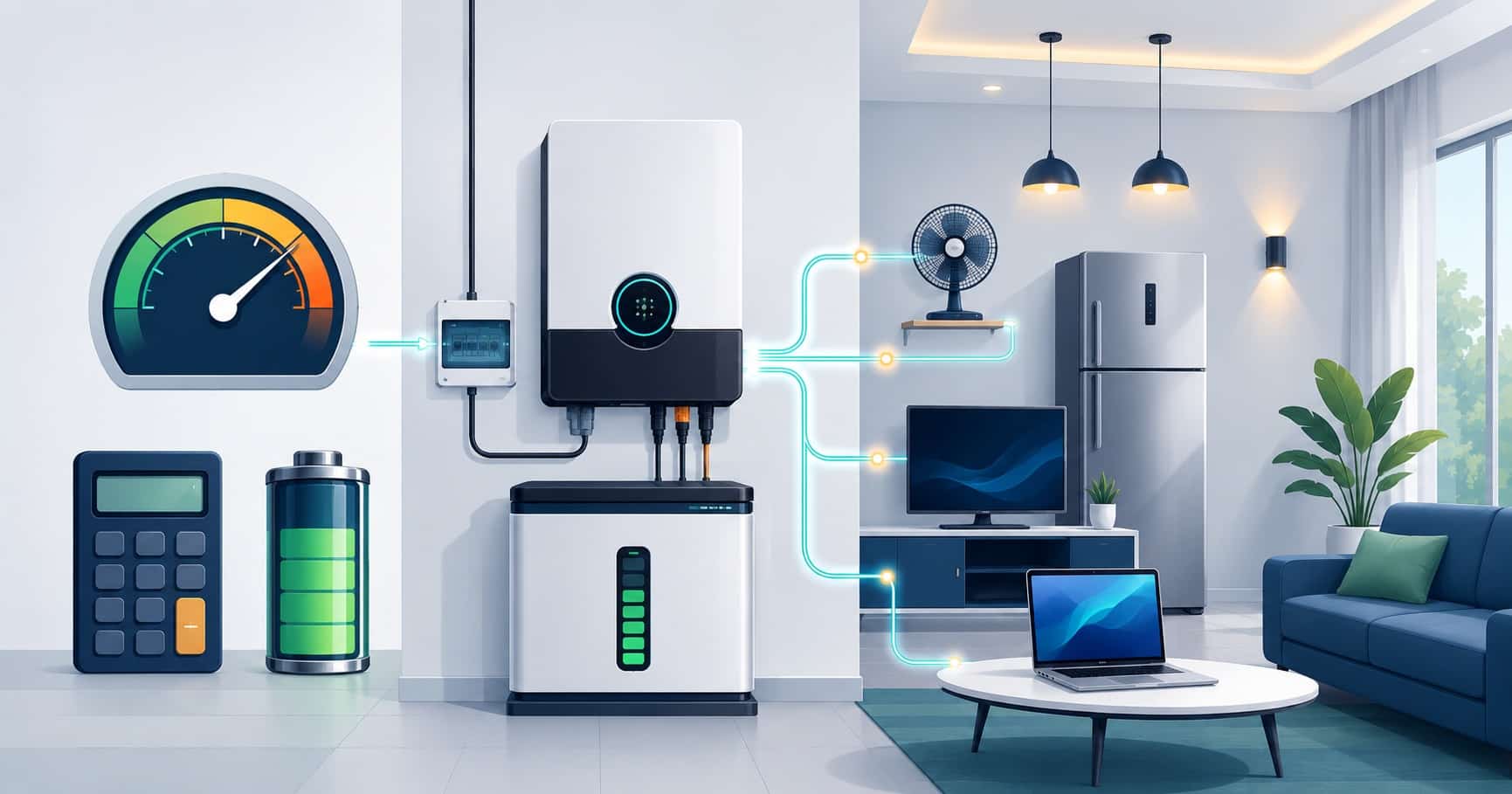
Buy an inverter that's too small and it beeps, trips and shuts down every time the freezer and AC start together. Buy one that's too big and you've paid for power you never use. If you're asking "what size inverter do I need?", the answer comes from your appliances, not your house size or your old generator. This guide shows you how to work it out in five steps, with a worked example for a Lagos flat.
Why your generator's size is the wrong guide
Many people pick an inverter to match their generator: "I use a 3.5kVA gen, so I'll buy a 3.5kVA inverter." That rarely works out.
A generator has fuel, so it can run for as long as you keep filling it. An inverter runs on stored power, so its size has to match both what you switch on and how long the batteries must last. So a generator that works for three hours of evening use tells you little about the inverter and batteries you need for a whole night.
Step 1: List what you want on backup
Walk through your house and write down every appliance you want working when NEPA takes light. Be honest. If you'll switch on the AC at 11pm, it goes on the list.
Then find each one's watts. It's printed on the label, usually at the back or bottom, or in the manual. If you can't find it, the figures in the table below are typical for Lagos homes.
| Appliance | Typical running watts |
|---|---|
| LED bulb | 7 to 12W each |
| Standing or ceiling fan | 50 to 80W each |
| TV (32 to 55 inch) and decoder | 80 to 150W |
| Wi-Fi router | 10 to 20W |
| Laptop | 50 to 90W |
| Fridge | 100 to 200W |
| Chest freezer | 100 to 200W |
| Washing machine (no hot wash) | 400 to 800W |
| Microwave | 1,000 to 1,500W |
| Pressing iron | 1,000 to 1,200W |
| 1HP inverter AC | 600 to 900W |
| 1.5HP inverter AC | 900 to 1,300W |
| 1HP pumping machine | 750 to 1,000W |
Step 2: Add up the running watts
Add the watts of everything that could be on at the same time. Leave out things you'll only use one at a time. For example, if nobody irons while the microwave is running, count only the bigger of the two.
This total is your running load.
Step 3: Allow for start-up surge
Anything with a motor or compressor pulls extra power for a second or two when it starts. That includes fridges, freezers, pumping machines and older non-inverter ACs. A fridge that runs at 150 watts can pull three or more times that as it starts.
Most inverters can handle a short surge, often about twice their rated power for a few seconds. Check the "surge" or "peak" rating in the manual. Your aim is simple: the running load plus the start-up surge of your biggest motor should stay under that surge rating.
Inverter ACs start slowly, so their surge is small. That's one reason they work so much better on backup than older ACs.
Step 4: Add headroom and turn watts into kVA
Don't plan to run an inverter at its limit. Keep your running load under about 80% of its rated watts. To get the watts you need, divide your running load by 0.8.
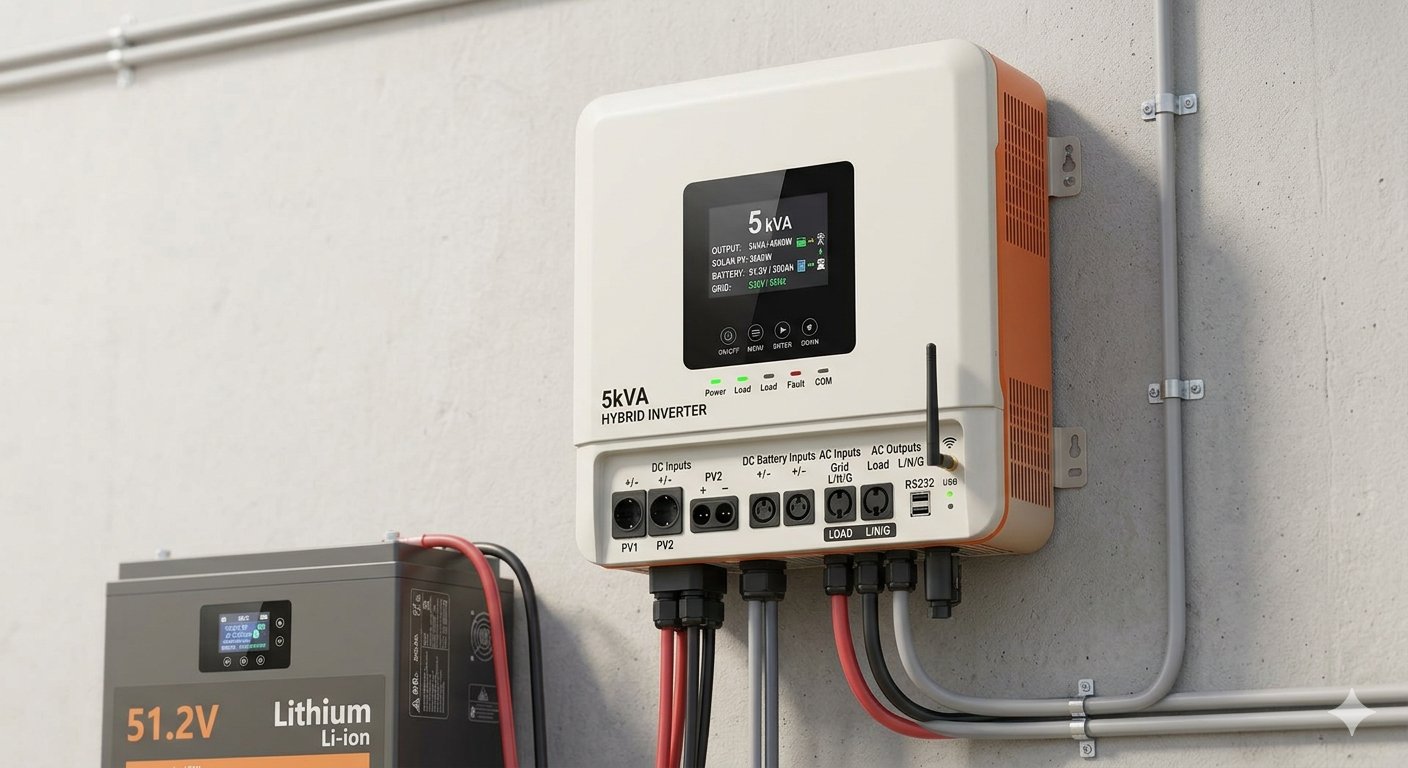
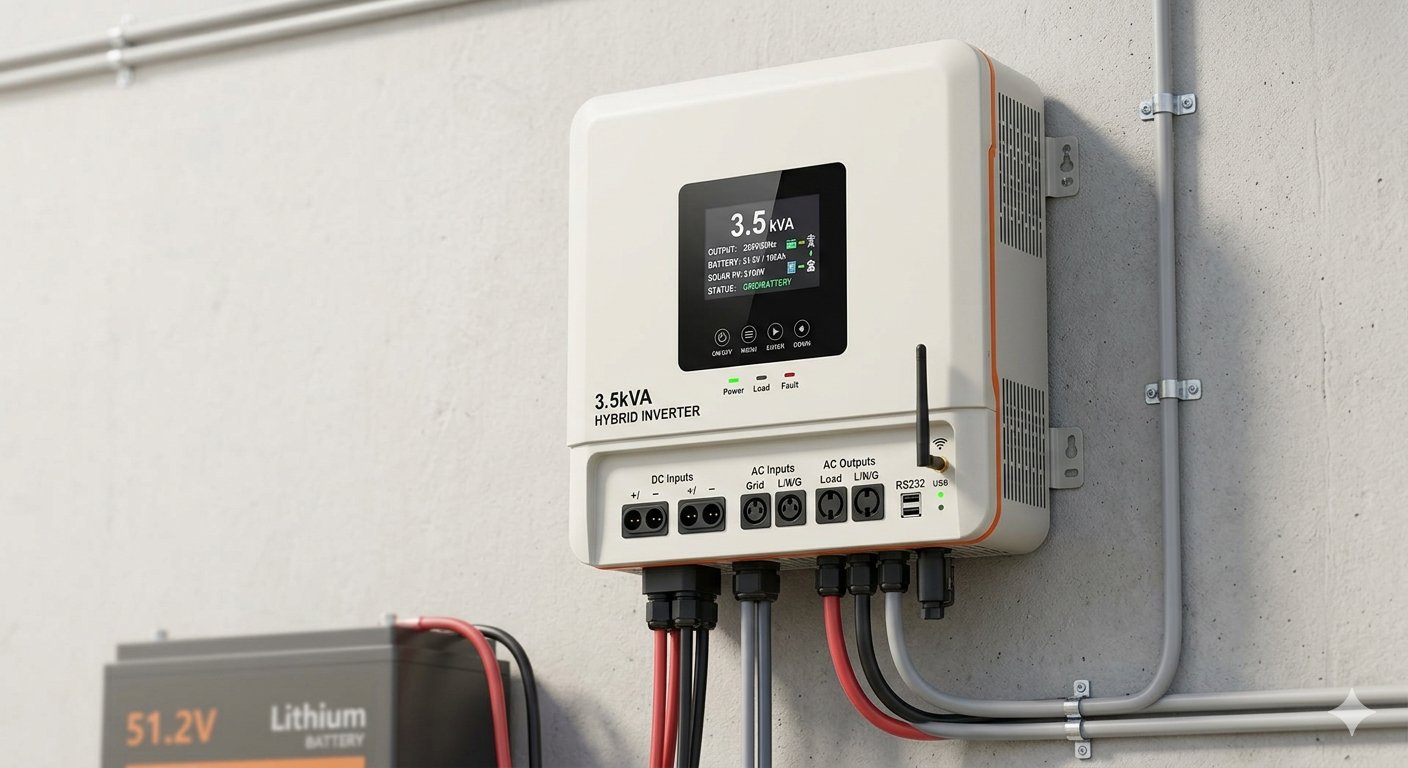
Next, turn watts into kVA. Inverters are sold in kVA, and many give about 0.8 watts for every VA. So a 3.5kVA inverter gives about 2,800 watts, and a 5kVA gives about 4,000 watts. Some newer inverters give the full figure (5kVA gives 5,000 watts). The "rated output power" on the label tells you which kind you have.
Then pick the next common size up. In Nigeria that's usually 1kVA, 1.5kVA, 2.5kVA, 3.5kVA, 5kVA, 7.5kVA or 10kVA.
Step 5: Size the battery for your night
The inverter size tells you what you can switch on. The battery decides how long it lasts.
Estimate your average load at night (usually much lower than your peak, since the microwave and iron are off). Multiply it by the hours you need backup. Then add about 10% for the inverter's own losses.
Tubular batteries should only be run down to about half, so you need twice that figure in stored capacity. Lithium batteries can be run down much further, so you need less extra. Our guide on lithium vs tubular batteries explains why.
Worked example: a 3-bedroom flat in Lagos
Here's what a typical evening list might look like:
| Appliance | Watts |
|---|---|
| 10 LED bulbs | 100W |
| 3 fans | 210W |
| TV and decoder | 120W |
| Fridge | 150W |
| Chest freezer | 150W |
| Router and phone chargers | 40W |
| Laptop | 60W |
| 1HP inverter AC | 800W |
| Running load | 1,630W |
Surge check: the freezer and fridge are the biggest start-ups. Starting together, they might add about 600 watts for a moment, making about 2,230 watts at peak. That's well inside the surge rating of any 3.5kVA inverter.
Headroom: 1,630 ÷ 0.8 = about 2,040 watts needed.
Size: a 2.5kVA inverter gives about 2,000 watts, which is too tight. A 3.5kVA inverter gives about 2,800 watts. That's the right size here. See what a 3.5kVA inverter can carry for more on this size.
Battery: suppose the AC runs for 3 hours at night and everything else averages 500 watts over 8 hours. That's about 2.4kWh for the AC plus 4kWh for the rest, so 6.4kWh. Add 10% and you need about 7kWh of usable storage. That's a big battery bank for a 3.5kVA system. If AC at night matters to you, plan for a bigger battery bank, or a 5kVA system with room to add batteries later.
The same flat with a pumping machine
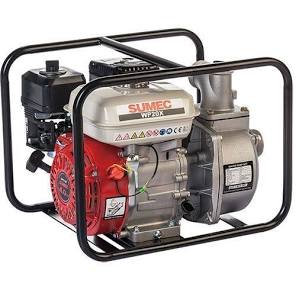
Now change two things. The family swaps the 1HP AC for a 1.5HP inverter AC, and wants to run a 1HP pumping machine while everything else is on.
- Running load: 1,630W − 800W + 1,200W + 1,000W = 3,030W
- With headroom: 3,030 ÷ 0.8 = about 3,790 watts
A 3.5kVA inverter (about 2,800 watts) is now too small. A 5kVA inverter fits, and one that gives the full 5,000 watts leaves more room. The other option is to keep the 3.5kVA and only pump in the afternoon with the AC off. See what a 5kVA inverter can carry for more.
What size inverter do I need for my home? A quick guide
If you want a rough starting point before doing the sums:
- Self-contain or mini flat, with no fridge: 1.5kVA
- 1 to 2 bedroom flat, with a fridge or freezer: 2.5kVA to 3.5kVA
- 3 bedroom flat, with one AC: 3.5kVA to 5kVA
- Duplex, with 2 or more ACs or a pumping machine: 7.5kVA to 10kVA
Our guide to solar energy for home explains what each size usually runs and how many panels it needs.
Check your sums with an installer
Adding up watts gets you close. An installer should also look at your wiring, your changeover, where the inverter and batteries will sit, and whether your AC is an inverter type.
You can send your list to us on WhatsApp and ask questions at no cost. When you're ready, get a quote. We'll book a site assessment and give you a written plan for your inverter installation.
21 Questions to Ask Before You Pay an Inverter Installer in Lagos
A step-by-step list of what to check before, during, and after your installation, so you never end up paying for someone else's guesswork.