What Can a 3.5kVA Inverter Carry? AC, Freezer and Pumping Machine
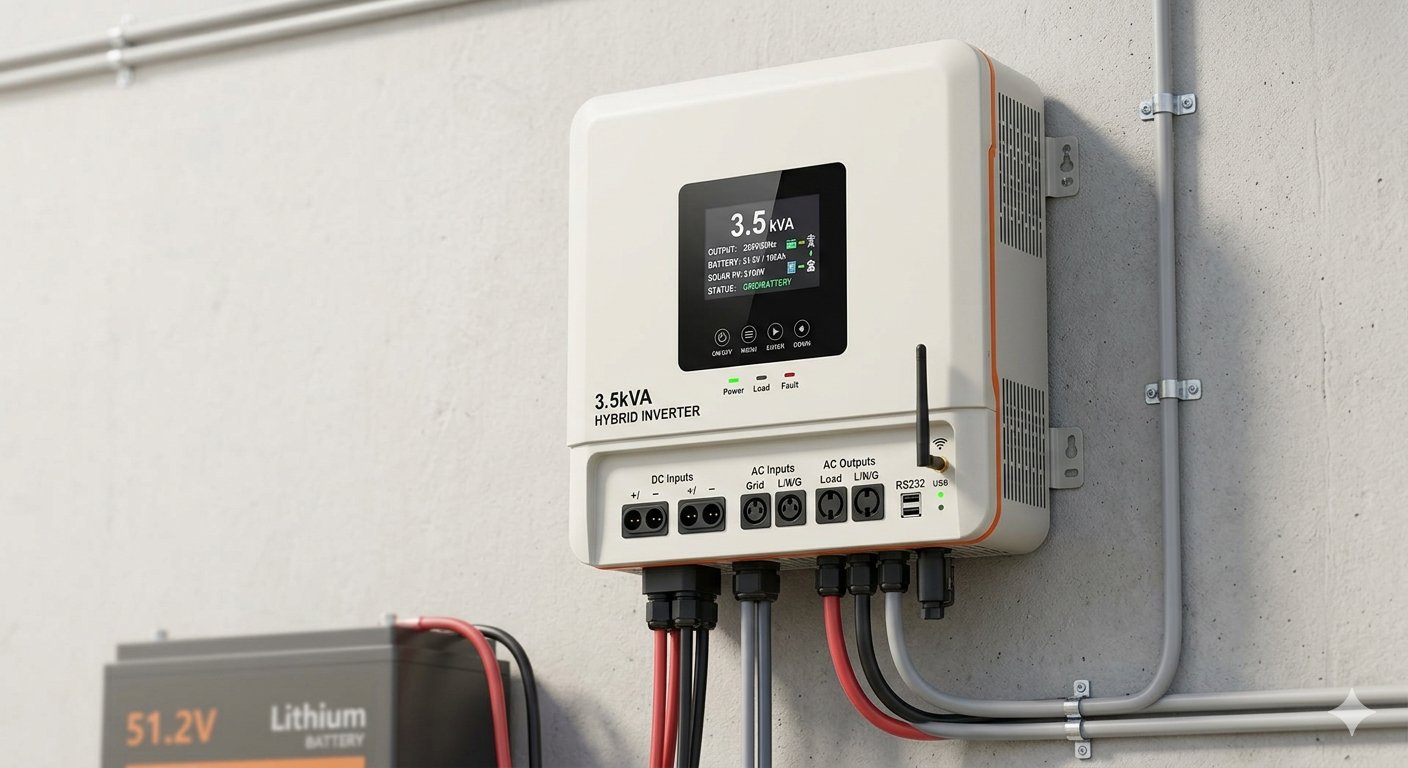
"Can my 3.5kVA carry AC?" Lagos homeowners ask this a lot before they buy an inverter. This guide answers what can a 3.5kVA inverter carry, appliance by appliance: the AC, the freezer, the pumping machine, the pressing iron. It also covers how long the batteries will last when NEPA takes light, and how many solar panels you need to charge them.
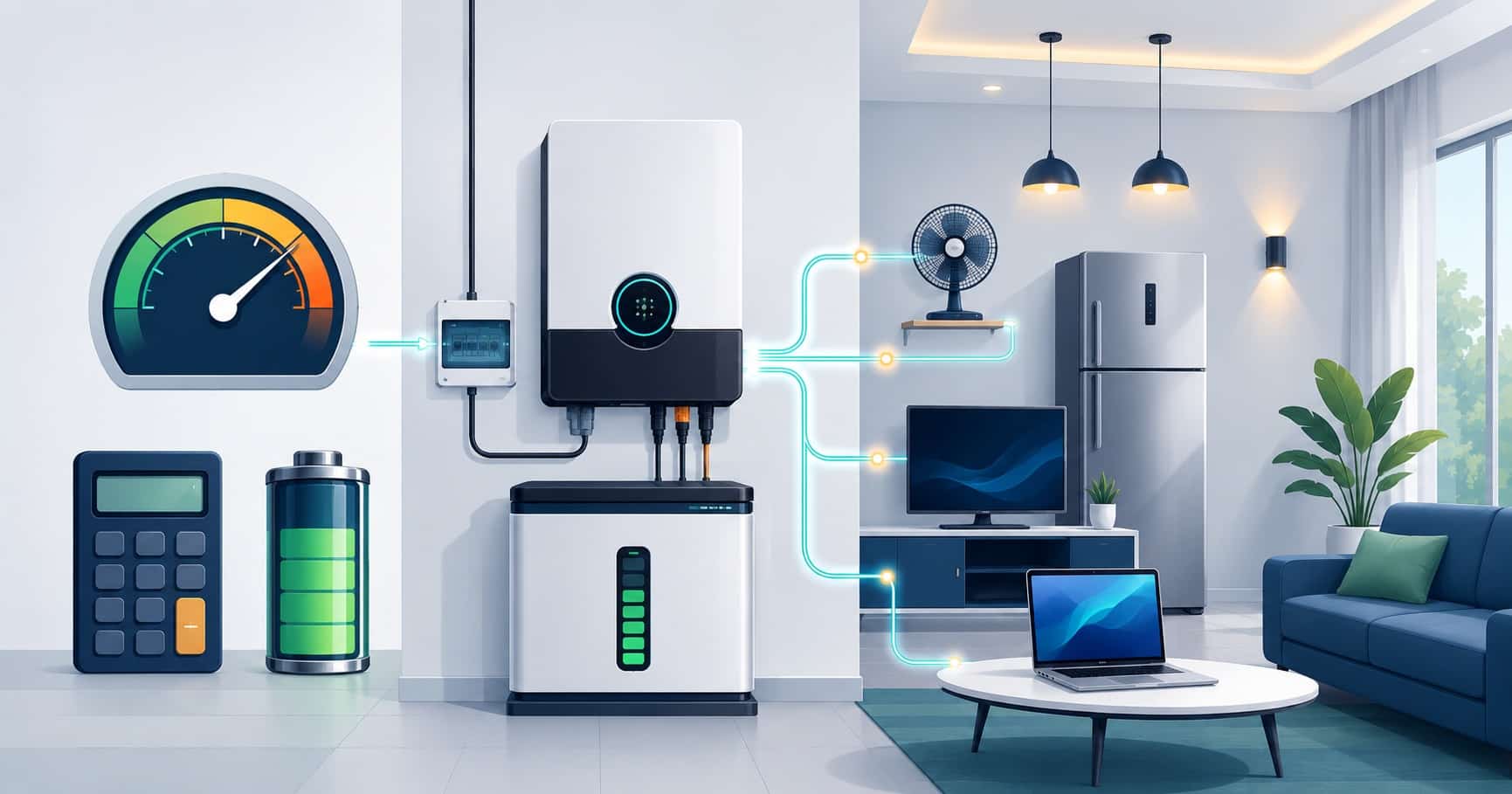
The short answer: a 3.5kVA inverter runs a normal family home well. It can carry fans, lights, TVs, a fridge, a freezer and one small inverter AC. It struggles when heavy appliances start at the same time.
First, what 3.5kVA means in watts
Inverters are sold in kVA, but your appliances are labelled in watts. They are not the same number.
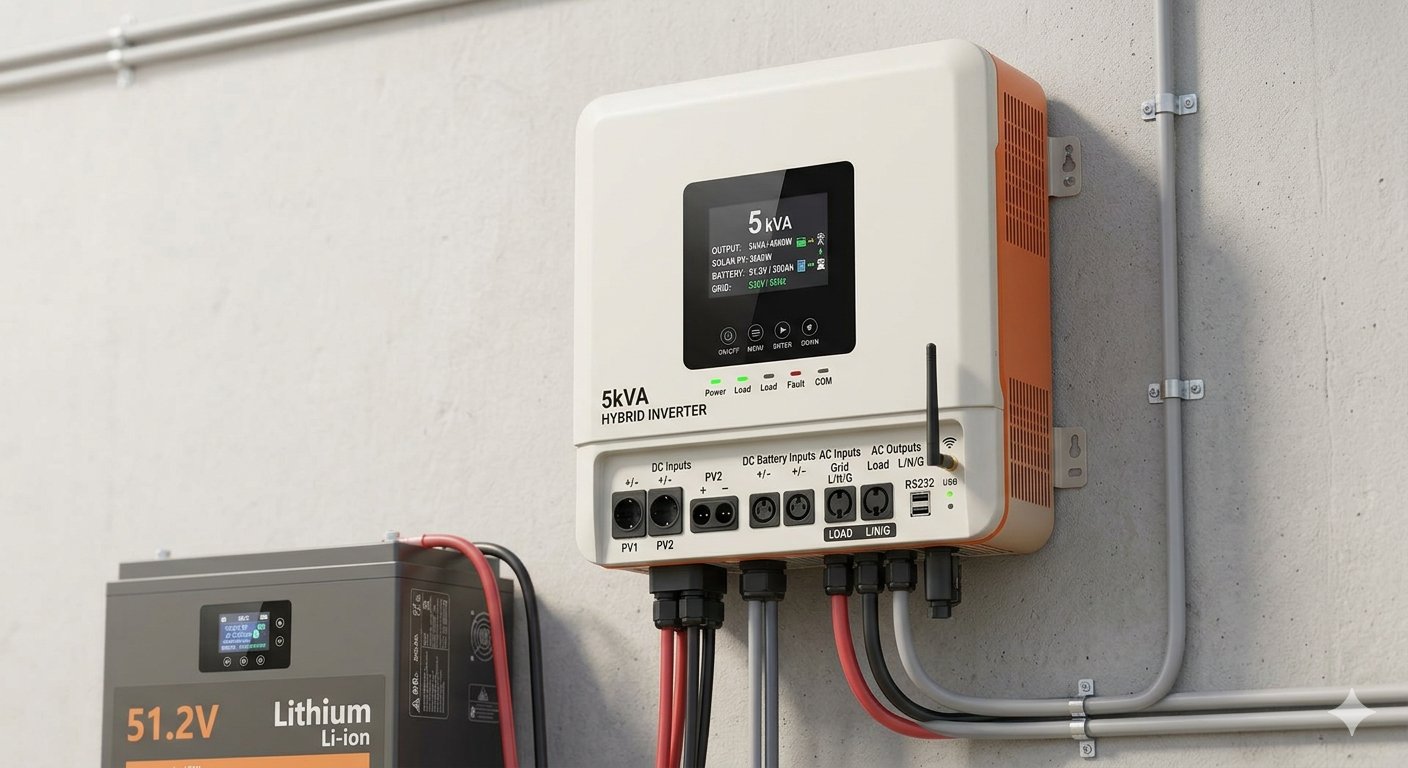
Many older 3.5kVA inverters give about 2,800 watts (3.5 × 0.8). Many newer ones give 3,000 watts or a bit more. Check the "rated output power" line on the inverter's label or manual. That watts figure is your true limit.
Don't plan to use all of it. Keep your normal load under about 80% of the rated watts, so around 2,300 to 2,500 watts at a time. That leaves room for motors to start and keeps the inverter from running hot.
Most 3.5kVA inverters run on a 24V battery bank. That usually means two 12V batteries, or one 24V lithium battery.
So, what can a 3.5kVA inverter carry?
Here are typical figures for common Lagos appliances. Your own appliance labels are the final word, since models differ.
| Appliance | Typical running watts | Can a 3.5kVA carry it? |
|---|---|---|
| LED bulbs (10 of them) | 70 to 100W | Yes |
| Standing or ceiling fans (3) | 150 to 250W | Yes |
| TV and decoder | 80 to 150W | Yes |
| Wi-Fi router and phone chargers | 20 to 50W | Yes |
| Laptop | 50 to 90W | Yes |
| Fridge | 100 to 200W | Yes |
| Chest freezer | 100 to 200W | Yes |
| Washing machine (no hot wash) | 400 to 800W | Yes, when the AC is off |
| Microwave | 1,000 to 1,500W | Yes, for short use |
| Pressing iron | 1,000 to 1,200W | Yes, but it drains the battery fast |
| 1HP inverter AC | 600 to 900W | Yes |
| 1HP non-inverter AC | 900 to 1,200W, with a big start-up surge | Risky |
| 1.5HP inverter AC | 900 to 1,300W | Yes, alone, for a short time |
| 2HP AC | 1,500W and up | No |
| 0.5HP pumping machine | about 400 to 500W, with a start-up surge | Yes |
| 1HP pumping machine | about 750 to 1,000W, with a big start-up surge | Only with other heavy loads off |
| Electric kettle, hot plate, water heater | 1,500 to 3,000W | No |
Can a 3.5kVA inverter carry AC?
Yes, if it's the right AC.
An inverter AC starts slowly. It ramps its compressor up instead of jumping to full power, so its start-up draw stays low. A 1HP inverter AC runs comfortably on a 3.5kVA inverter alongside your fans, lights and fridge.
A non-inverter AC (the older, cheaper type) is different. When its compressor kicks in, it can pull three to five times its running power for a moment. On a 3.5kVA inverter, that surge can trip the overload alarm or shut the inverter down, especially if other things are already on.
A 1.5HP inverter AC will run on a 3.5kVA inverter, but it takes a big share of the capacity. It will also empty a small battery bank in a couple of hours. A 2HP AC is too much for a 3.5kVA inverter. If you want AC most nights, look at a 5kVA inverter instead.
Can a 3.5kVA inverter carry a freezer?
Yes. A fridge and a chest freezer together are well within a 3.5kVA inverter's limit. Both have a short start-up surge when the compressor kicks in, but it's small enough for a 3.5kVA to handle.
Watch the battery instead. A freezer runs all night, so it slowly uses stored power while you sleep.
Can a 3.5kVA inverter carry a pumping machine?
A 0.5HP pumping machine, yes. A 1HP pumping machine can start on many 3.5kVA inverters, but only when the AC, iron and microwave are off. Water pumps pull a large surge at start-up, and that surge plus an AC can go over the limit.
The easy fix is to pump water in the afternoon when the sun is strong or when NEPA is on, with the AC off.
Pressing iron and microwave
A 3.5kVA inverter can carry both, one at a time. The problem is the battery. A pressing iron uses about 1,000 to 1,200 watts, so 30 minutes of ironing can use a big chunk of a small battery bank. Iron when there's light or strong sun, not at 10pm on battery.
What a 3.5kVA inverter should not carry
Anything that heats with electricity. Electric kettles, hot plates, electric cookers and water heaters use 1,500 to 3,000 watts each. They either overload a 3.5kVA inverter or empty the batteries in minutes. Keep these on gas or on NEPA.
How long will the batteries last?
This depends on the battery bank, not the inverter. Here is a rough guide for a typical night load of about 500 watts (fans, lights, TV, fridge and router):
- Two 12V 200Ah tubular batteries store about 4.8kWh. You should only use about half of that to protect them, so roughly 2.4kWh. That's about 4 hours at 500 watts.
- One 24V 200Ah lithium battery also stores about 4.8kWh, but you can safely use most of it, around 4kWh. That's about 7 hours at 500 watts.
Add a 1HP inverter AC and the load climbs to around 1,200 watts. The same batteries then last less than half as long.
Our guide on lithium vs tubular batteries explains the trade-offs in more detail.
How many solar panels for a 3.5kVA inverter?
For most Lagos homes, 4 to 6 panels of 450 to 550 watts each is a good range. That gives about 2,000 to 3,000 watts of panels.
Lagos gets about 4 peak sun hours a day across the year. In July and August it can drop to about 3. After losses from heat, dust and wiring, a 450-watt panel gives around 1 to 1.4kWh a day. Six of them can refill a 4.8kWh battery bank and run your daytime load on most days.
Two things can change your number:
- Your inverter's solar input limit. Check this first. Some 3.5kVA inverters only accept about 1,000 to 1,600 watts of panels. Others take 4,000 watts or more. Check the "max PV input power" on the label before buying panels. Extra panels past this limit do nothing.
- When you use power. If your family is home in the daytime running fans and a freezer, you need more panels than a home that's empty until evening.
Signs your load is too big for a 3.5kVA
- The inverter beeps or shows "overload" when the AC or pump starts
- The inverter shuts down, then restarts, when a big appliance switches on
- The batteries are flat long before morning
- The inverter or battery area feels very hot
If you see these, the fix may be moving one or two heavy appliances to NEPA-only times. Or it may be time for a bigger inverter or more battery storage.
Get your load checked before you buy
Adding up your appliances on paper is a good start. But an installer should also check your wiring, your changeover, where the inverter will sit, and what you really run at night. That's what our inverter installation visit is for.
You can send us your list of appliances on WhatsApp and ask questions at no cost. When you're ready, get a quote and we'll book a site assessment and give you a written plan for your home.
21 Questions to Ask Before You Pay an Inverter Installer in Lagos
A step-by-step list of what to check before, during, and after your installation, so you never end up paying for someone else's guesswork.