Solar Energy for Home in Lagos: What Size You Need and What It Can Run
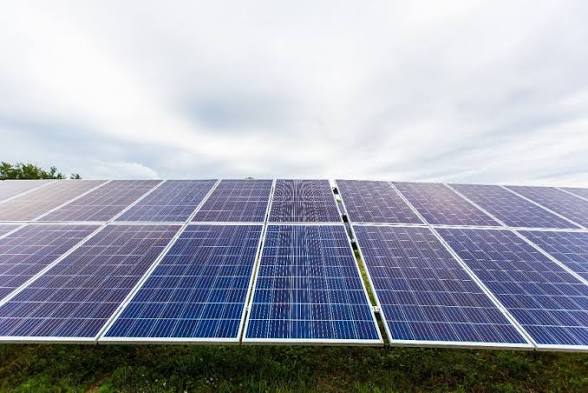
For a Lagos home, solar is mostly about the evenings: keeping the fan spinning and the freezer cold when NEPA takes light at 9pm. This guide explains solar energy for home use in Lagos in plain terms: what a home system is made of, what size fits your home, what it can and can't run, and how it compares with the plug-in solar kits sold in shops.
What solar energy for home means in Lagos
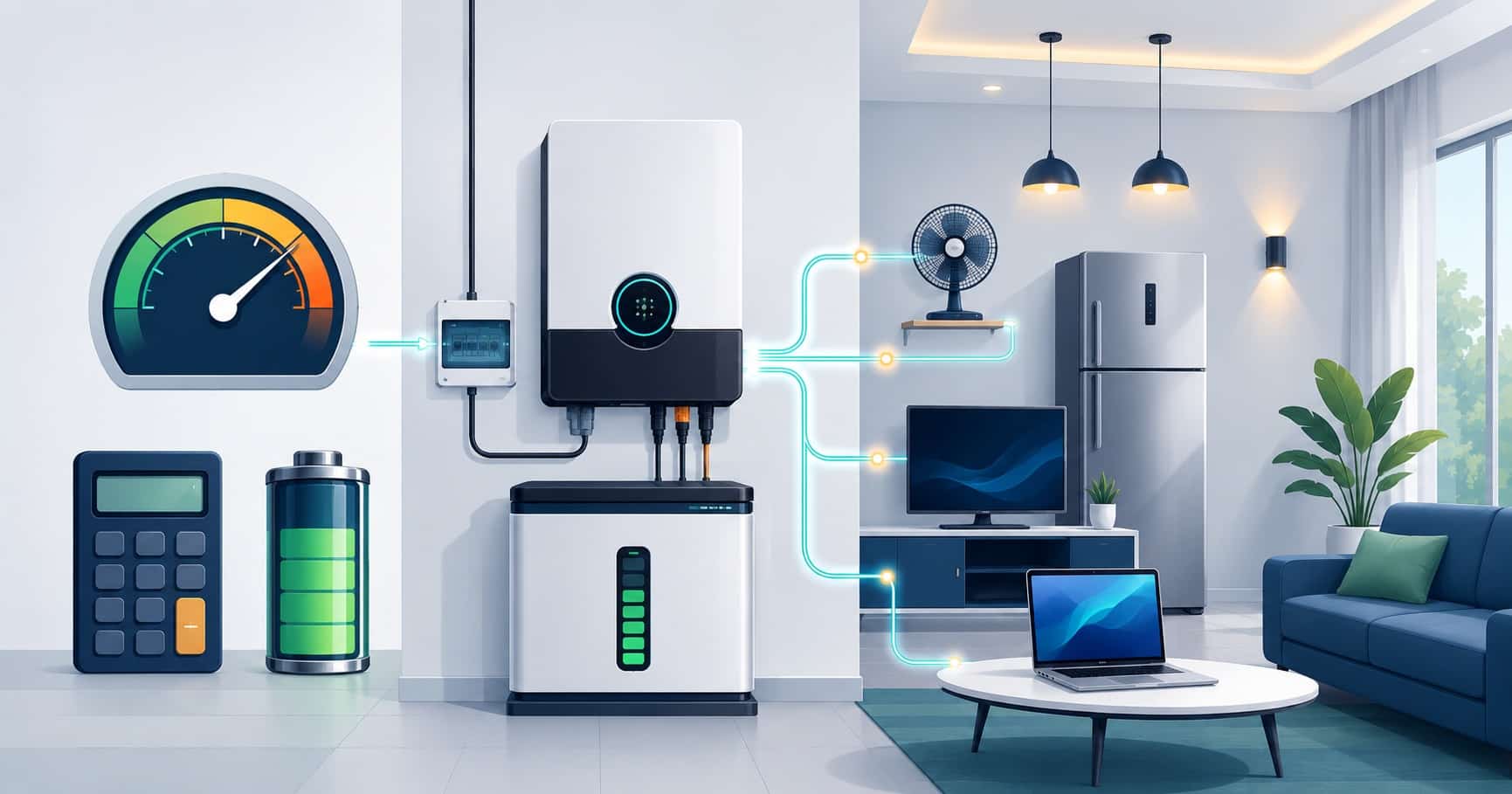
A home solar system has four main parts:
- Solar panels on the roof turn sunlight into power.
- An inverter turns that power into the kind your sockets use, and decides where power comes from at each moment.
- Batteries store power for the night and for cloudy days.
- Wiring, breakers and a changeover connect it all to your house safely.
In Lagos, almost every home system is a hybrid. By day, the panels run the house and charge the batteries. At night, the batteries take over. When NEPA brings light, or you run the generator, the inverter can use that to top up the batteries too. That last part matters most in July and August, when rain cuts how much the panels make.
Our complete homeowner's guide goes through each part and the installation process step by step.
What size system does your home need?
The size depends on what you run, not how many rooms you have. Still, most Lagos homes fall into one of these starting points:
| Your home | What it usually runs | Starting system |
|---|---|---|
| Self-contain or mini flat | Lights, fans, TV, laptop, phone charging | 1.5kVA inverter, 2 panels, a small lithium battery |
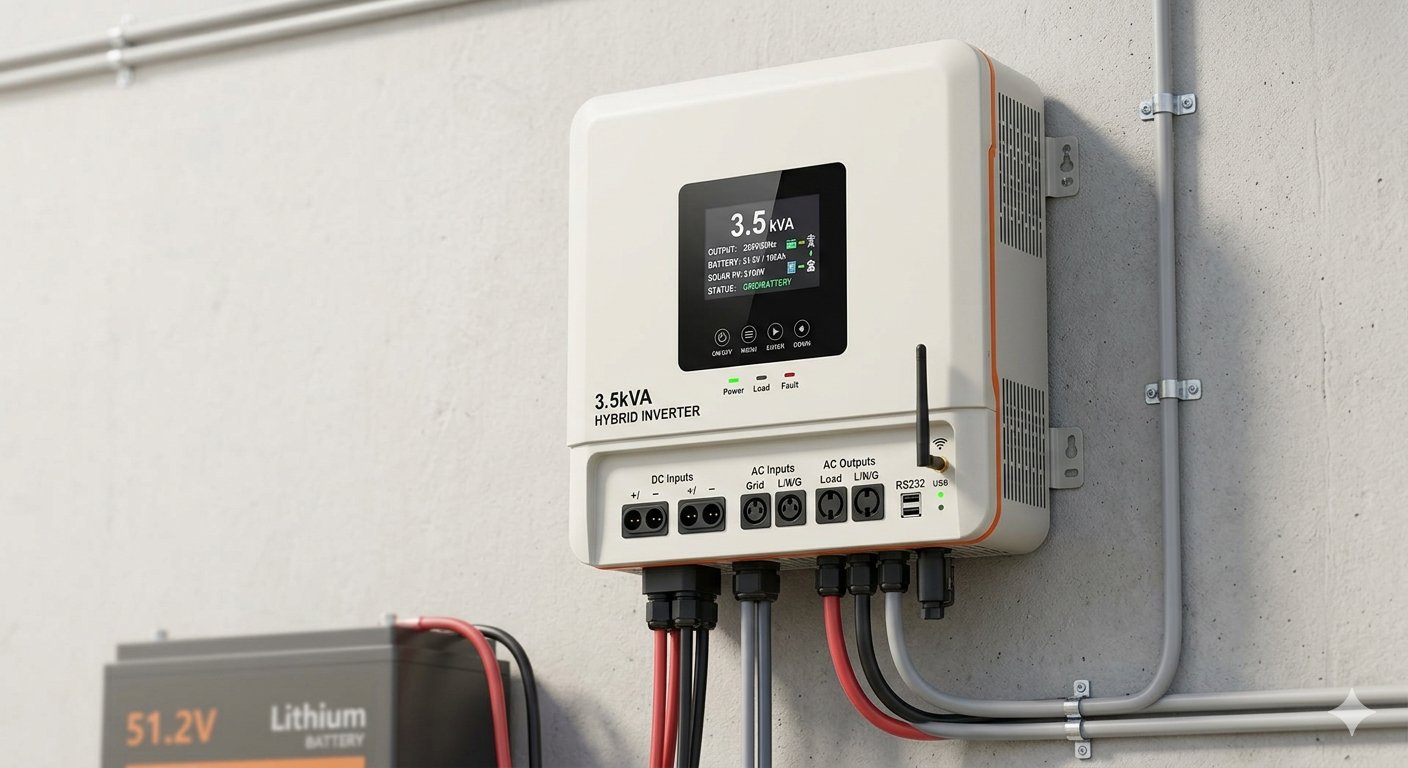
| 1 to 2 bedroom flat | The above plus a fridge or freezer | 3.5kVA inverter, 4 panels, about 3.5kWh of battery |
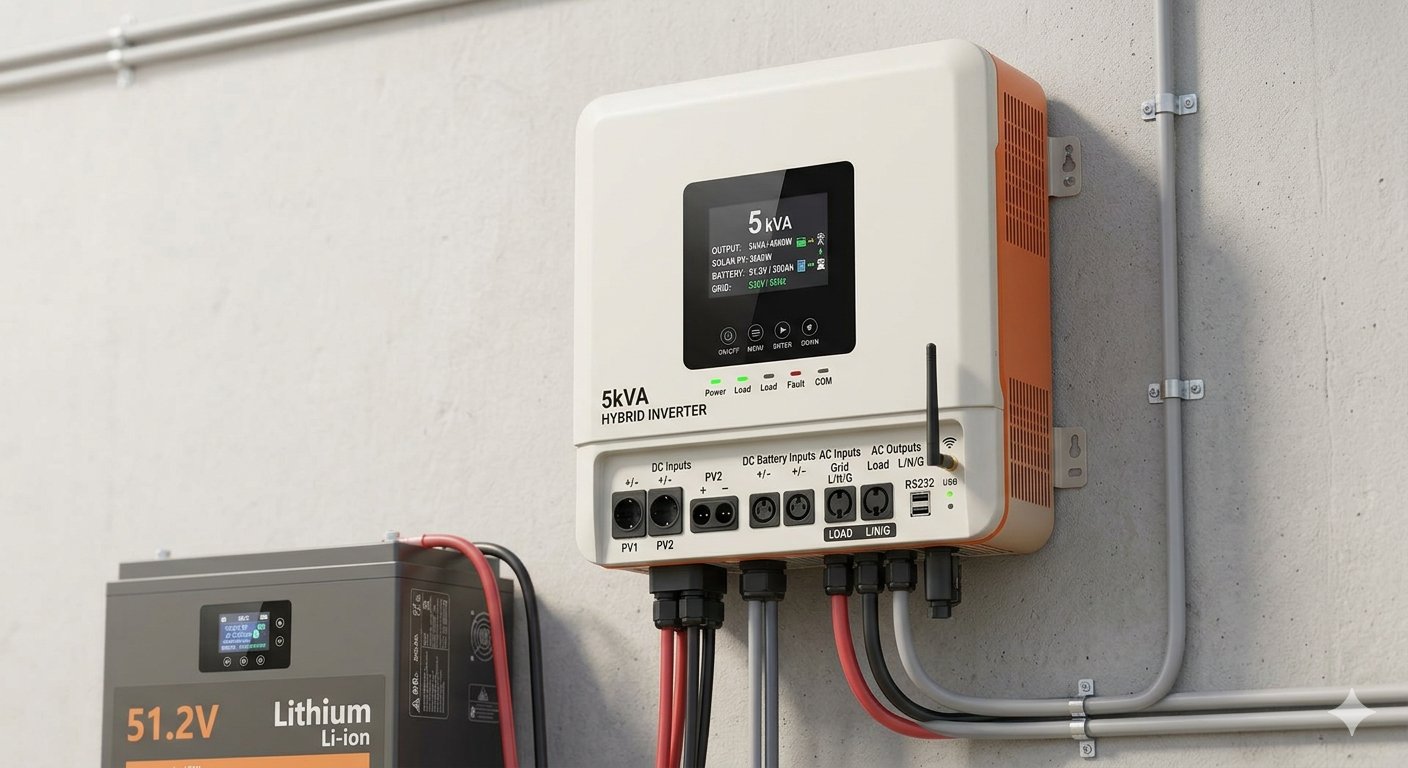
| 3 bedroom flat | A full flat, including one AC | 5kVA inverter, 6 panels, about 5kWh of battery or four tubular batteries (3.5kVA can do if the AC isn't used at night) |
| Duplex or large house | Several rooms, 2 or more ACs, pumping machine | 10kVA inverter, 12 panels, about 10kWh of battery |
The panels in this table are 550-watt panels. Treat these as starting points only. Two families in the same flat can need very different systems if one runs an AC all night and the other doesn't.
For more detail on each size, see:
- What a 3.5kVA inverter can carry
- What a 5kVA inverter can carry
- What size inverter you need, with a simple way to add up your own load
What solar can run well
Solar is good at things you run for many hours a day:
- Lights, fans, TVs, decoders and Wi-Fi
- Fridges and freezers, day and night
- Laptops and phone charging for people working from home
- An inverter AC, especially in the afternoon when the sun is strong
- A pumping machine, if you pump in the daytime
What solar struggles with
Anything that heats with electricity uses a lot of power. Electric cookers, hot plates, kettles and water heaters use 1,500 to 3,000 watts each. They empty batteries fast, so most homes keep these on gas or on NEPA.
Running ACs all night is possible, but it needs a large battery bank. The battery, not the panels, is usually the most expensive part of that plan. If night-time AC matters to you, say so at the start so the system is sized for it.
Solar kits, "solar generators" and installed systems
You'll see three kinds of solar products for sale in Lagos. They do different jobs.
Small solar home kits come with a panel, a control box and a few bulbs, sometimes a fan or TV. They are made for lighting and charging in a room or small flat. They are cheap and easy to set up, but they can't run a fridge, freezer or AC.
Portable "solar generators" are boxes with a battery and inverter inside, charged by a panel or by NEPA. You plug appliances straight into them. They are handy for a room or a shop, but most can't run a whole house for long, and they aren't wired into your sockets.
An installed solar system is wired into your house through the distribution board and changeover. It powers your normal sockets and switches, and it can grow later with more panels or batteries. It costs more at the start, but it's the only one of the three that can carry a whole home.
Does solar energy for home save money in Lagos?

It depends on what you're paying for power now.
If you run a petrol or diesel generator most evenings, fuel is a cost you pay every week. A solar system is paid for once, then the sun does most of the work. The saving grows the more hours you used to run the generator.
If you're on a Band A feeder, your tariff has been over ₦200 per kWh since the 2024 increase. Solar can cut how much you buy from the grid. The saving is smaller than replacing a generator, though, because Band A feeders are meant to get at least 20 hours of supply a day.
Our inverter vs generator guide compares running costs in more detail. For what drives the price of a system, see our solar installation cost guide.
Lagos weather and your panels
Lagos gets around 4 hours of strong sun a day on average. It can drop to about 3 in July and August, when rain and cloud are heavy. A good installer sizes the panels with the rainy season in mind, not only the sunny months.
Harmattan dust also settles on panels and lowers what they make. Rinsing them with clean water from time to time helps. Our maintenance service includes panel cleaning and system checks.
How long each part lasts
Each part of a home system wears out at a different pace:
- Solar panels last the longest. Good panels usually come with a 25-year output warranty, and they keep working after that at a lower output.
- Inverters usually last 5 to 10 years. Heat, poor airflow and power surges from NEPA shorten that, so where it's mounted matters.
- Tubular batteries often need replacing after 3 to 5 years in daily use.
- Lithium batteries last longer, often 8 years or more, if they're not run completely flat or kept in a hot room.
So you'll replace batteries and the inverter long before the panels. Plan for that from the start.
What to check before you buy
Ask any installer, including us, these questions before you pay:
- Did you work out my load from my appliances, or guess from my house size?
- What is the inverter's solar input limit, and do the panels fit under it?
- Which battery type is it, how many years is the warranty, and is that in writing?
- How will the system connect to my NEPA and generator supply?
- Who do I call if something goes wrong, and how fast do you come?
Clear answers to all five are a good sign. Our guide on what to check before you hire a solar installer goes further.
Getting started
Before anyone quotes you, list the appliances you want on backup and when you use them. That list decides the size of everything else.
You can send it to us on WhatsApp and ask questions at no cost. When you're ready, get a quote. We'll book a site assessment, check your roof, wiring and load, and give you a written plan for your solar panel installation.
21 Questions to Ask Before You Pay an Inverter Installer in Lagos
A step-by-step list of what to check before, during, and after your installation, so you never end up paying for someone else's guesswork.